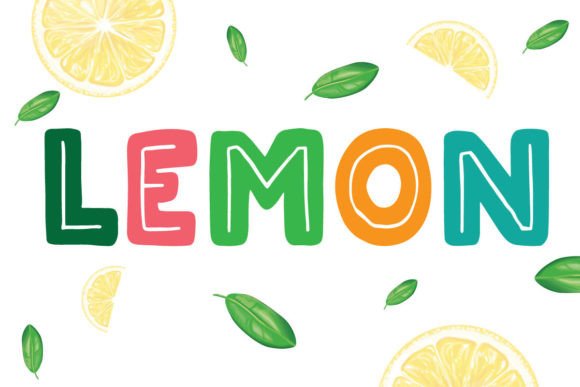
Lemon: A Charming Handwritten Display Font
What Is Lemon?
Lemon is a delightfully expressive handwritten display font featuring a single-line construction that balances playfulness with precision. Its clean, flowing strokes and subtle bounce give it warmth without sacrificing legibility—making it an instant standout among modern Display fonts. Whether you're designing a boutique logo or crafting social media graphics, Lemon delivers personality on demand. If you're searching for a Lemon free download, many platforms offer the font for personal use—but always verify licensing before deploying it commercially. What sets Lemon apart in the Display category isn’t just its cuteness; it’s how effortlessly it bridges whimsy and professionalism.
Letterforms with Character
Each glyph in Lemon carries gentle irregularity—slight variations in stroke width, organic entry/exit points, and relaxed terminals—that mimic natural handwriting. Unlike rigid script fonts, Lemon avoids excessive flourishes, keeping focus on clarity and charm.
Weight and Contrast
Lemon sits at a light-to-medium weight with low contrast between thick and thin strokes. This makes it highly versatile across sizes and mediums—unlike bolder Display fonts that risk overwhelming small layouts or losing nuance in print.
Spacing and Rhythm
The default spacing is open and airy, encouraging breath between letters without drifting into looseness. That rhythm supports readability in headlines and short phrases—critical for any premium Display font aiming beyond decoration.
Lemon for logo design
Lemon shines in logo design where brand voice leans friendly, artisanal, or lifestyle-oriented. Its handwritten authenticity helps convey approachability—ideal for cafes, boutiques, or wellness studios. Just avoid cramming it into dense wordmarks; it thrives best as a primary mark or accent element.
Lemon for branding
As part of a broader branding system, Lemon works exceptionally well for subheads, taglines, and campaign messaging. Paired with a neutral sans-serif body font, it adds human texture without undermining cohesion—a hallmark of a professional Fonts font.
Lemon for wedding invitations and typography
For weddings, Lemon brings soft elegance to invitations, menus, and signage. Its single-line construction ensures crisp reproduction in foil stamping or digital prints. When used thoughtfully, it elevates stationery from generic to memorable—especially when paired with minimalist layouts.
Lemon for posters, social media, and packaging
From Instagram story headers to product labels, Lemon holds attention without shouting. Its distinct silhouette reads instantly at small scale on mobile feeds—and scales beautifully on large-format posters. For eco-friendly packaging or handmade goods, Lemon reinforces craft and care.
Font Pairing & Combinations
Knowing what fonts pair well with Lemon unlocks its full potential. Start with a warm, low-contrast serif like Playfair Display for contrast in tone and structure—or go minimalist with Inter or Poppins for clean, contemporary balance. For editorial layouts, try Lemon alongside a modestly weighted sans-serif like Lato or Montserrat to anchor its energy. These combos support the Lemon font pairing principle: contrast without conflict. Avoid pairing Lemon with other scripts or overly decorative Display fonts—they’ll compete rather than complement.
Licensing & Commercial Use
The question “is Lemon free for commercial use?” depends entirely on your source. Some versions are offered as a free Display font for Fonts platforms with limited rights—often allowing personal projects only. Others require purchase for Lemon commercial use. Always check the Lemon font license before launching a client project, merchandise line, or app interface. If you need broad permissions—including resale, SaaS integration, or unlimited impressions—a licensed version is the safest, most professional choice.
How to Download & Use Lemon
To get started, you can find a download Lemon font free version on trusted repositories like CreativeFabrica (with attribution) or FontSquirrel (under specific licenses). For guaranteed compatibility and extended features, consider purchasing the official release. Once downloaded, installing Lemon is straightforward: double-click the .OTF or .TTF file and follow your OS prompts. In how to use Lemon in Canva, upload it as a custom font via Brand Kit; in Photoshop, install first then select it from the Type menu; in Word, restart the app after installation to see it in the font list. Pro tip: test rendering at 12–16pt to ensure spacing holds up in body contexts.
Designer Notes & Tips
Before finalizing, test Lemon in black and white—it loses impact if grayscale conversion flattens its subtlety. Also, preview at actual usage size: while it excels in headlines, it’s not built for paragraphs. When comparing options, ask “Lemon vs similar font” alternatives like Yellowtail or Pacifico—Lemon stands out for its cleaner baseline, tighter x-height, and more consistent rhythm. It’s less dramatic than Yellowtail and more refined than Pacifico, landing squarely in the sweet spot for designers who want charm without clutter. If you’re evaluating a premium Display font for a high-stakes branding job, Lemon earns its place—not because it’s trendy, but because it performs reliably across real-world constraints.